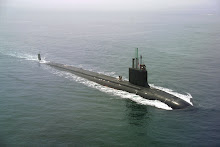
BASIC DESIGN
We carry out 4-6 basic design tasks for different types of vessels every year.
Again an unbeatable track record. The big volume, references, combined with
high quality end products, built ships, gives us a good starting point for any
kind of basic design task.
Basic design prepared by Deltamarin is a good tool for the Shipowner to
reach the intended vessel configuration even when working with a less
experienced shipyard. The basic design package includes all the required
design disciplines:
General part
Model tests
Design criteria
Hull classification
Hull outfitting
Interior
HVAC
Machinery
Auxiliary machinery
Electrical
Procurement
Showing posts with label ship. Show all posts
Showing posts with label ship. Show all posts
Sunday, July 19, 2009
INTEGRATING PERSONNEL MOVEMENT SIMULATION INTO PRELIMINARY SHIP
Download at:
INTEGRATING PERSONNEL MOVEMENT SIMULATION INTO PRELIMINARY SHIP
DESIGN
D Andrews, L Casarosa and R Pawling, University College London, UK
E Galea, S Deere and P Lawrence, University of Greenwich, UK
SUMMARY
Traditionally, when designing a ship the driving issues are seen to be powering, stability, strength and seakeeping.
Issues related to ship operations and evolutions are investigated later in the design process, within the constraint of a
fixed layout. This can result in operational inefficiencies and limitations, excessive crew numbers and potentially
hazardous situations.
This paper summarises work by University College London and the University of Greenwich prior to the completion of
a three year EPSRC funded research project to integrate the simulation of personnel movement into early stage ship
design. This integration is intended to facilitate the assessment of onboard operations while the design is still highly
amenable to change.
The project brings together the University of Greenwich developed maritimeEXODUS personnel movement simulation
software and the SURFCON implementation of the Design Building Block approach to early stage ship design, which
originated with the UCL Ship Design Research team and has been implemented within the PARAMARINE ship design
system produced by Graphics Research Corporation. Central to the success of this project is the definition of a suitable
series of Performance Measures (PM) which can be used to assess the human performance of the design in different
operational scenarios.
The paper outlines the progress made on deriving the PM from human dynamics criteria measured in simulations and
their incorporation into a Human Performance Metric (HPM) for analysis. It describes the production of a series of
SURFCON ship designs, based on the Royal Navy’s Type 22 Batch 3 frigate, and their analysis using the
PARAMARINE and maritimeEXODUS software. Conclusions on the work to date and for the remainder of the project
are presented addressing the integration of personnel movement simulation into the preliminary ship design process.
INTEGRATING PERSONNEL MOVEMENT SIMULATION INTO PRELIMINARY SHIP
DESIGN
D Andrews, L Casarosa and R Pawling, University College London, UK
E Galea, S Deere and P Lawrence, University of Greenwich, UK
SUMMARY
Traditionally, when designing a ship the driving issues are seen to be powering, stability, strength and seakeeping.
Issues related to ship operations and evolutions are investigated later in the design process, within the constraint of a
fixed layout. This can result in operational inefficiencies and limitations, excessive crew numbers and potentially
hazardous situations.
This paper summarises work by University College London and the University of Greenwich prior to the completion of
a three year EPSRC funded research project to integrate the simulation of personnel movement into early stage ship
design. This integration is intended to facilitate the assessment of onboard operations while the design is still highly
amenable to change.
The project brings together the University of Greenwich developed maritimeEXODUS personnel movement simulation
software and the SURFCON implementation of the Design Building Block approach to early stage ship design, which
originated with the UCL Ship Design Research team and has been implemented within the PARAMARINE ship design
system produced by Graphics Research Corporation. Central to the success of this project is the definition of a suitable
series of Performance Measures (PM) which can be used to assess the human performance of the design in different
operational scenarios.
The paper outlines the progress made on deriving the PM from human dynamics criteria measured in simulations and
their incorporation into a Human Performance Metric (HPM) for analysis. It describes the production of a series of
SURFCON ship designs, based on the Royal Navy’s Type 22 Batch 3 frigate, and their analysis using the
PARAMARINE and maritimeEXODUS software. Conclusions on the work to date and for the remainder of the project
are presented addressing the integration of personnel movement simulation into the preliminary ship design process.


Subscribe to:
Posts (Atom)